8 signs your roof needs restoration
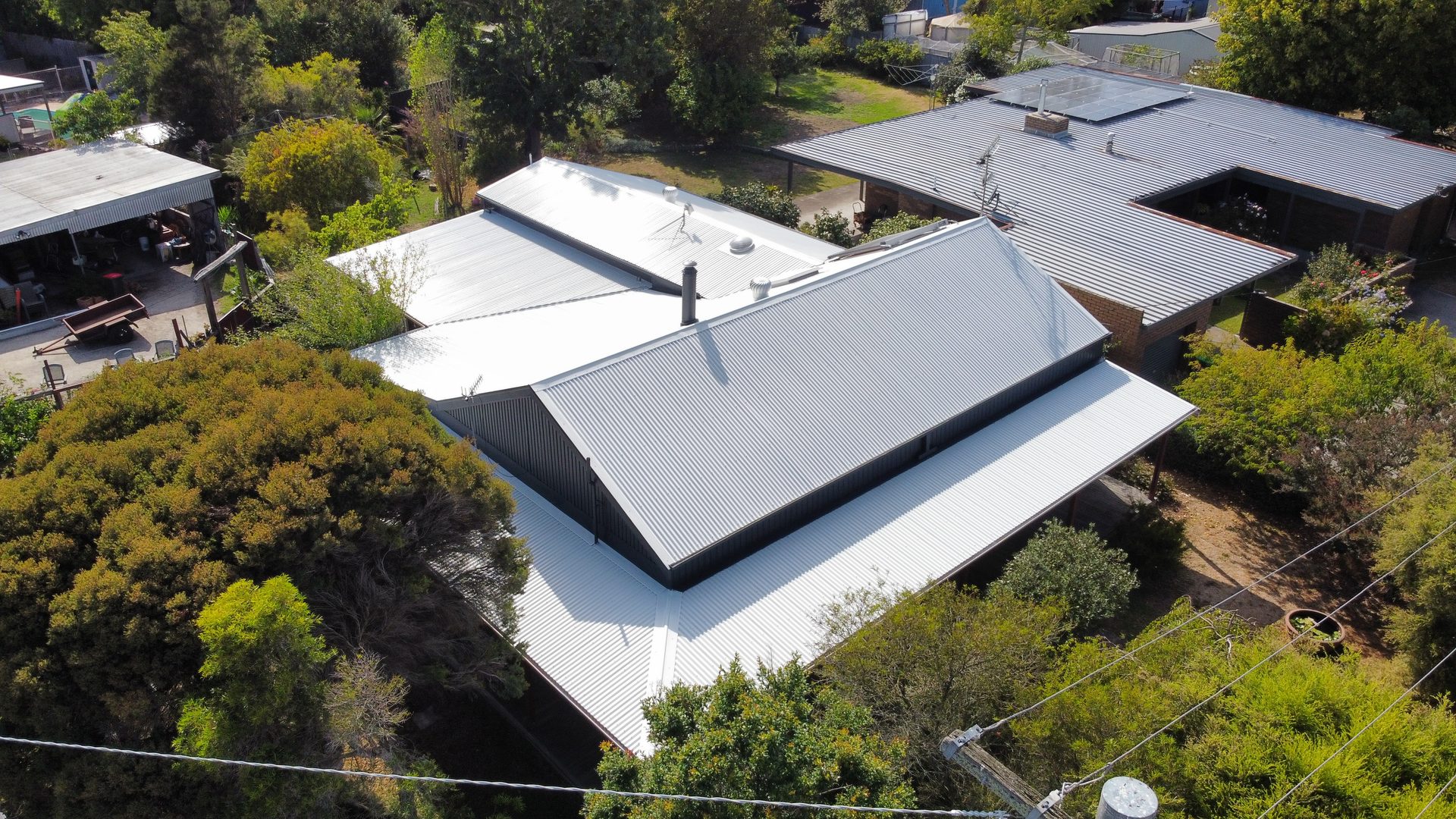
Most people don't think about their roof until it starts leaking — and by then, a job that could've been a straightforward restoration has often turned into something bigger and more expensive. The frustrating part is that a roof almost always warns you first. You just have to know what you're looking at.
After more than twenty years on roofs across Melbourne and Gippsland, the signs become second nature. Here are the eight we tell every homeowner to watch for — most of which you can spot from the ground, without climbing anywhere near a ladder.
Why catching it early matters
A roof restoration is a maintenance job — cleaning, repairing, re-sealing and recoating a roof that's fundamentally sound. A roof replacement is a rebuild, and it costs several times more. The whole point of restoration is to catch a roof before the small problems become structural ones. Wait too long and you don't get to choose restoration; the roof chooses replacement for you.
So the signs below aren't just cosmetic gripes. They're the early warnings that let you fix a roof cheaply instead of expensively.
The 8 signs to watch for
1. Cracked, broken or slipped tiles
The most obvious one. Cracked and broken tiles let water straight into the roof cavity, and a tile that's slipped out of line leaves a gap doing the same thing. A handful of broken tiles is normal wear; a scattering of them across the roof means the whole surface is getting brittle with age. Either way, they're a repair job before they become a leak. Our roof repairs handle exactly this.
2. Faded, chalky or peeling colour
If your roof has gone from a rich colour to a washed-out, chalky version of itself — or the coating is visibly flaking and peeling — the protective membrane has worn through. That coating isn't just for looks; it's what seals the tile or sheet against water and UV. Once it's gone, the material underneath starts absorbing moisture and degrading. A roof repaint restores both the seal and the street appeal.
3. Moss, lichen and mould
Green or black growth spreading across the roof isn't just ugly — it holds moisture against the surface, works its way under tiles, and speeds up deterioration. It's especially common on the shaded, south-facing side of a roof. A proper high-pressure clean with moss treatment kills it off and stops it coming back, and it's usually the first step of any restoration.
4. Crumbling or missing pointing on the ridge caps
Look along the peaks and hips of the roof — the ridge caps. If the mortar holding them (the "pointing") is cracked, crumbling, or falling out in chunks, those caps are no longer sealed or secure. This is one of the most common failures we see, and it's a genuine risk: loose ridge caps can lift in strong wind. Fresh re-bedding and flexible re-pointing fixes it properly.
5. Water stains on your ceilings or in the roof space
Brown patches on a ceiling, damp spots in the corners of rooms, or visible water marks on the timbers if you poke your head into the roof space — these mean water is already getting in. It doesn't always drip dramatically; often it just quietly soaks in and does its damage out of sight. If you're seeing stains, the roof needs attention now, not next year.
6. Rusty or damaged valleys and flashing
The valleys (the metal channels where two roof slopes meet) and the flashing around chimneys, vents and skylights are where a lot of leaks start. If that metalwork is rusting through, lifting, or full of debris, water finds its way in. Valleys cop the most water flow of anywhere on the roof, so they're worth a close look.
7. Gutters full of grit and granules
Next time you clean the gutters, look at what's in them. A build-up of coarse, sandy grit is the roof coating literally washing off your tiles — a clear sign the surface is breaking down. Add in the leaf litter that Gippsland's trees drop, and gutters that constantly overflow or sag are telling you the roof and drainage need looking at together.
8. Age — 15 to 20 years since the last restoration
Even a roof with no obvious problems has a clock on it. A quality restoration typically lasts around 15 years; a roof that's never been done and is 20-plus years old is well into borrowed time. If you can't remember the last time your roof was cleaned, sealed and recoated, it's worth a free inspection just to know where you stand.
You don't need all eight of these for your roof to need attention. One or two — cracked tiles plus crumbling pointing, say — is usually enough that a restoration now will save you a much bigger bill later.
The Gippsland factor
Roofs out here work harder than most. The wet, cold winters keep surfaces damp for longer, which is exactly what moss and lichen love. The tree cover across so much of Gippsland means constant leaf litter in gutters and valleys. And the temperature swings between seasons flex the roof materials, opening up the cracks in old bedding and pointing. All of it adds up to roofs that benefit from being kept on top of — and homeowners who leave it too long tend to pay for it.
Not sure what you're looking at?
If you've read this and recognised a couple of these signs on your own roof, the sensible next step isn't to panic or to climb up there yourself — it's to get someone who does this every day to take a proper look. We offer free, no-obligation inspections across Gippsland: we'll tell you honestly whether your roof needs a full restoration, a smaller repair, or nothing at all just yet.
Elite Roofing Restorations is family-run and founded by Luke, who spent close to twenty years roof tiling in Melbourne before moving to Gippsland. That trade background means we can look at a roof and tell you what's actually going on — not talk you into work you don't need.
To book a free look, call us on 0437 626 630 or send a few photos through our contact form. If you'd like to understand pricing before you call, our guide on what roof restoration costs in Gippsland is a good place to start.